The Osborne Effect: How One Mistake Derailed a Tech Pioneer
Imagine a visionary entrepreneur poised to revolutionize the tech world, only to face a dramatic fall from grace due to a single misstep. This was the fate of Adam Osborne, whose early 1980s innovations promised to transform personal computing. Despite his groundbreaking achievements, a critical mistake led to what is now known as the Osborne Effect, a lesson in product management that remains relevant today.
Vighnesh Chavan
1/15/20242 min read


Adam Osborne's Rise and Fall
In the early 1980s, Adam Osborne was on a trajectory to become a tech icon, akin to Henry Ford’s impact on the automotive industry. After successfully selling a company specializing in programming manuals, Osborne turned his attention to personal computing. His vision was ambitious: a world where computers were not just for tech enthusiasts but for everyday consumers.
In 1981, Osborne introduced the Osborne One, a revolutionary portable computer that came pre-installed with an operating system and was affordably priced. The Osborne One’s success was meteoric, with sales reaching $73 million in its first year and a peak of 10,000 units sold per month. Osborne seemed set to reshape the tech landscape.
The Critical Error: The Osborne Effect
However, Osborne’s ascent was cut short by a crucial misjudgment. In a bid to build excitement for future innovations, he prematurely announced a more advanced computer that was still in development. This decision had a devastating impact: prospective buyers of the Osborne One chose to wait for the new model, causing a steep drop in sales.
This premature announcement not only stalled current sales but also exposed the company to severe financial strain. Combined with accounting mismanagement, the result was catastrophic: Osborne Computer Corporation filed for bankruptcy in 1983. Economists now label this scenario the “Osborne Effect,” a phenomenon where an early product announcement destroys demand for existing products.
Learning from the Osborne Effect
For product owners, managers, and entrepreneurs, understanding the Osborne Effect is crucial for several reasons:
Strategic Planning: It underscores the importance of carefully timing product announcements. Premature disclosure can undermine current product sales and disrupt revenue streams.
Customer Expectations: Managing customer expectations through strategic communication can prevent the erosion of sales and maintain market interest.
Revenue Stability: Ensuring that new product launches do not negatively impact existing product lines is essential for financial stability.
The Osborne Effect serves as a cautionary tale about the risks of over-promising and under-delivering. By avoiding premature announcements and strategically planning product rollouts, companies can better manage customer expectations and safeguard their revenue.
Mitigating the Osborne Effect
To avoid falling victim to the Osborne Effect, consider the following strategies:
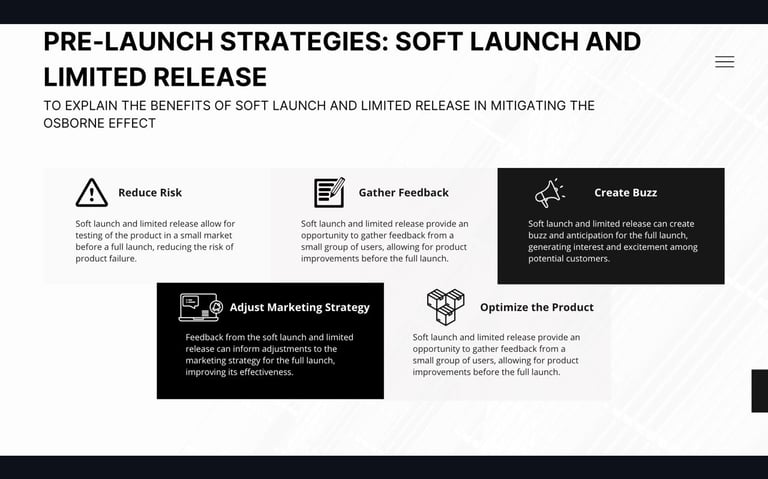
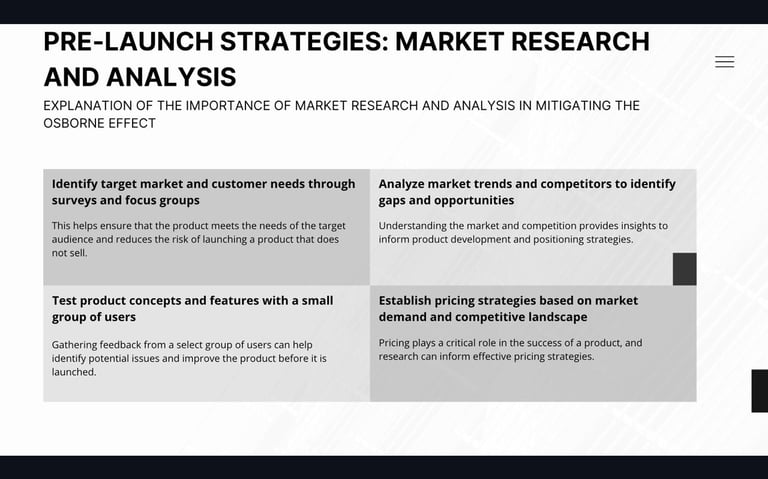
Pre-Launch Strategy: Develop a detailed pre-launch plan that includes market research and customer engagement strategies to build anticipation without compromising existing sales.
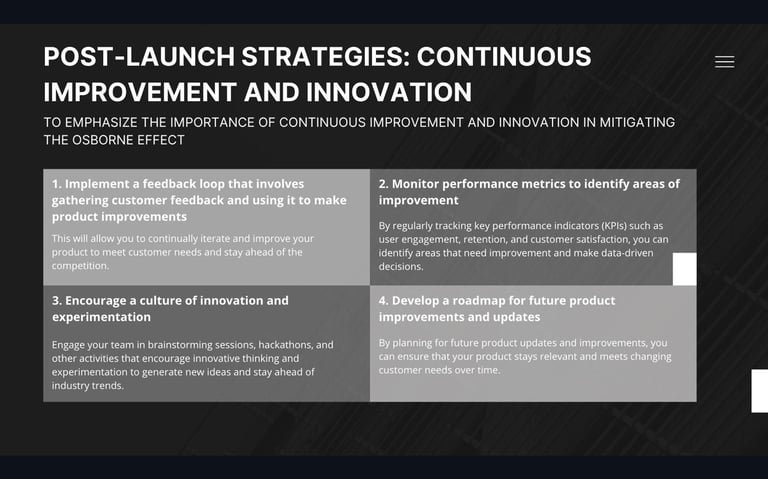
Post-Launch Follow-Up: Ensure robust post-launch support and continuous engagement to maintain customer interest and loyalty.
Controlled Announcements: Introduce new products in a way that complements, rather than competes with, existing offerings.
For a deeper dive into these strategies, please refer to the accompanying presentation, which outlines actionable recommendations to successfully navigate product launches and avoid the pitfalls of the Osborne Effect.